
Photography
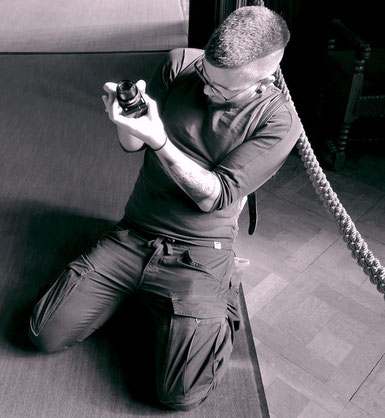
»My work combines a poetic
visual language, shaped by an interest in forms and structures,
with a contemporary conceptual approach that seeks to engage with socially relevant themes.«
About me as a Photographer
Artist introduction in English (Reel | 1:12 min)
My photography combines the aesthetics of fine art photography with the reflective strategies of conceptual photography. Through an intensive engagement with nature and space, I seek to reveal not only the beauty of the world, but also its fragility under the impact of human intervention. My works function as visual narratives, inviting viewers to form their own relationship with nature, space and the cycles that shape them.
I find inspiration, among other sources, in Pictorialism and in the later work of Mimmo Jodice and Josef Sudek. Their play with light and shadow, their interest in forms and structures, and their subtle way of capturing atmosphere also inform my own style. The resulting photographs move beyond mere representation, unfolding as poetic, at times painterly works, while also seeking to engage with socially relevant concerns. My images are shaped by a deep appreciation of detail and a strong aesthetic sensibility, with the aim of rediscovering photography as an artistic medium for myself and encouraging the viewer to reflect critically.
F i n e A r t P h o t o g r a p h y
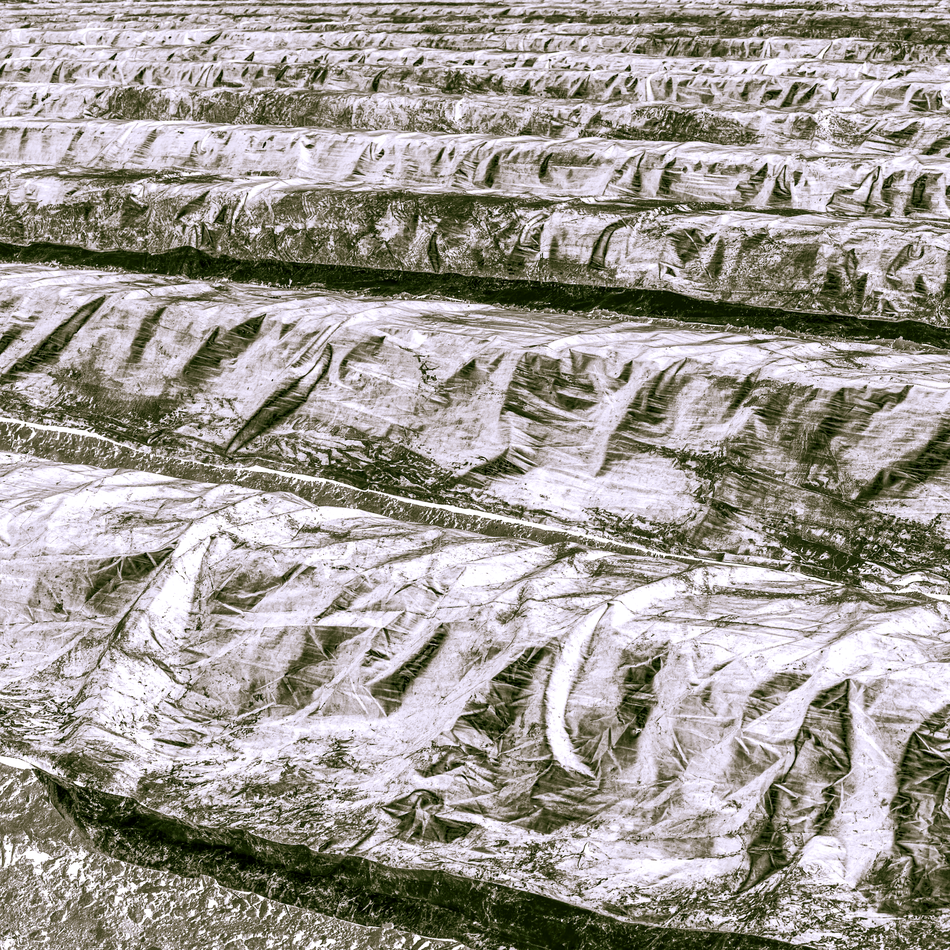
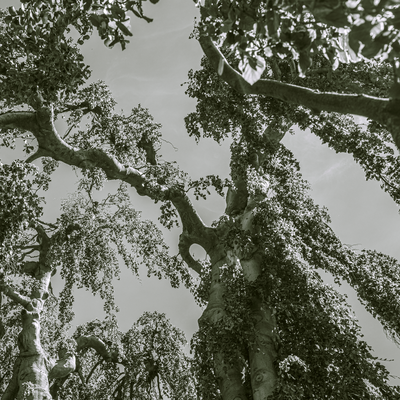
»Cloaked II«
Fine Art photo print under acrylic glass (matt) |80 x 80 cm | 2017
Helmholtz Centre
for Environmental
Reserach – UFZ, Leipzig

C o n c e p t u a l P h o t o g r a p h y
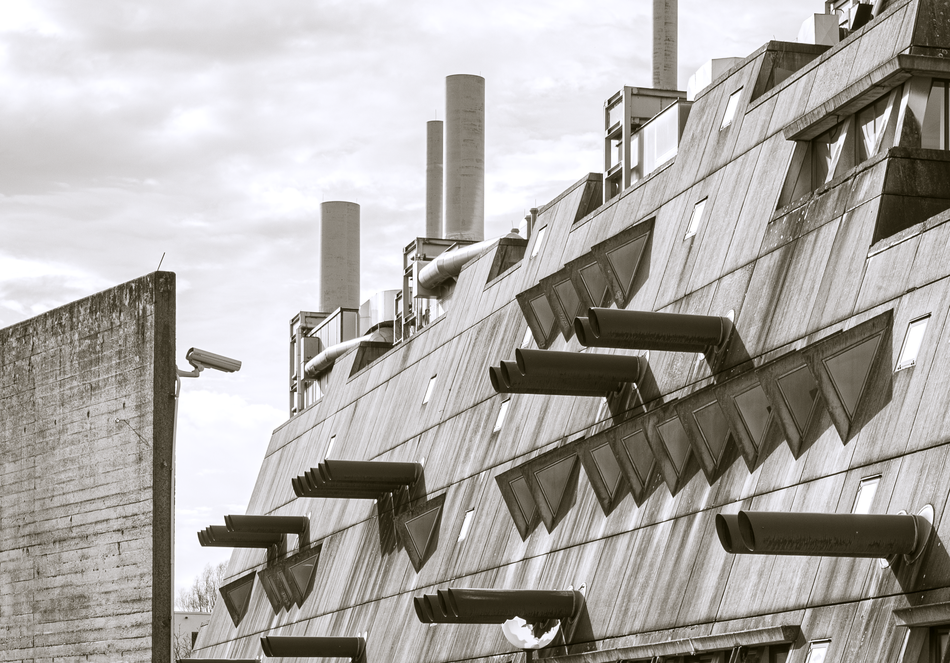
»Opposition«
Photograph | 2024
The Berlin Brutalist building known as the »Mäusebunker« stands paradigmatically for »transitions« of many kinds: transitions in function, in time and in symbolic meaning. Long since stripped of its original function as a scientific laboratory, and at one point earmarked for demolition, the building has now become a modern »ruin«. It has mutated into an architectural icon, developing a new and particularly striking presence precisely through decay and an ongoing »identity crisis«. At the same time, the fate of the building points to the excessive short-livedness of contemporary construction and its devastating effects on the climate.
In the work »Opposition«, the surveillance camera and exhaust pipes appear to be directed at one another, holding each other in check. The building takes on the appearance of a »gunboat«, seeming to brace itself against its own fate.
Cycle »The Fossil Era«

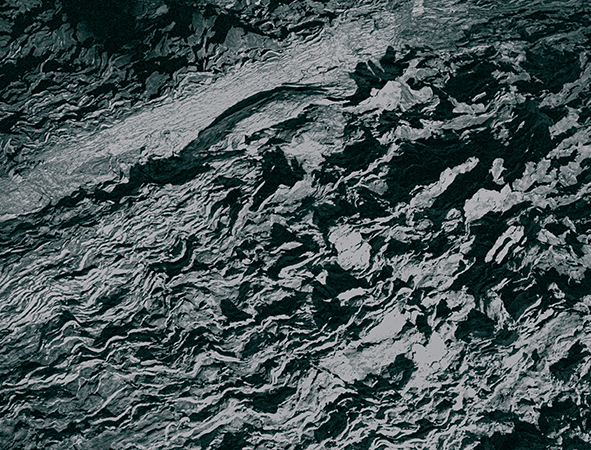
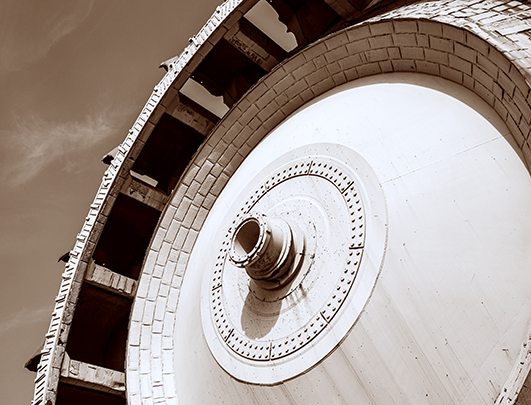
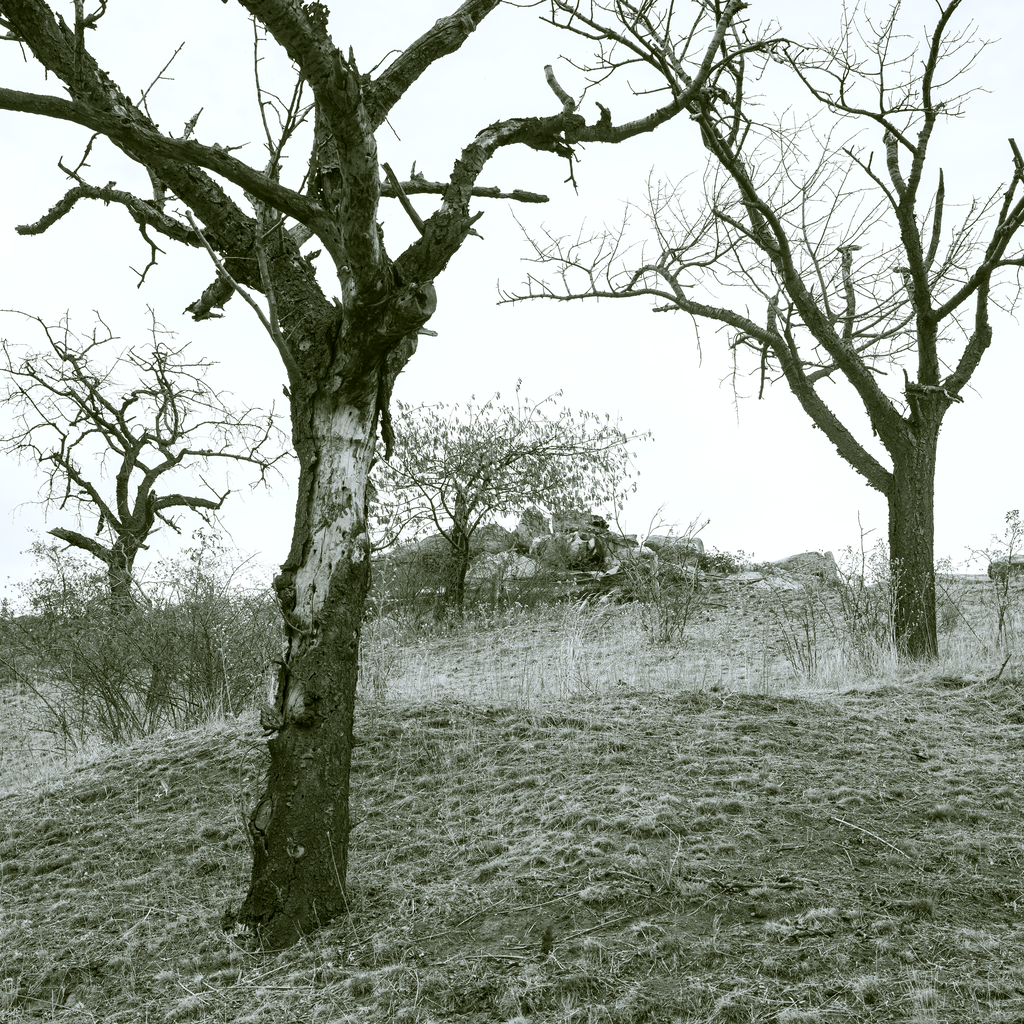
The burning of fossil fuels is the main driver of anthropogenic climate change. In the cycle »The Fossil Era«, I address the fossil age in a quadriptych from four different perspectives.
First, there is the origin: the Carboniferous stands for the geological period in which nature formed the raw materials we now call fossil fuels, the massive combustion of which is currently driving climate change. I capture this theme in a work, »Carbon I«, which shows ferns in enchanting beauty and untouched purity — the very plant group that was characteristic of this geological era.
In the work »Fossil (In the Cave)«, complex and sensual folds appear, appealing in form and refined in colour, recalling coal seams. At the same time, the work points to the highly problematic consequences of fossil combustion, which inevitably arise as an association when viewing the image. The aesthetics of the form and the problematic nature of what is represented here create a tension that can communicate itself directly in the act of reception.
A similar dynamic is at work in »Coal Mining«, which presents the excavator bucket of a remaining coal digger in the Leipzig region in a not unaesthetic way. As striking as the motif appears in its perspective and colouring, the 'coal machines' depicted here embody that comparatively brief phase of massive greenhouse gas emissions — and the stark disproportion between the energy advantage gained and the enduring burden of Earth system change.
In the final work, »Spring«, whose title is intended to recall Rachel Carson’s »Silent Spring«, we encounter the consequences of climate change ultimately triggered by fossil combustion within the landscape: here, as a forest fire that inscribes a dry and wounded quality into what would otherwise be a scene of springtime greening. The group of trees was inspired by works such as Caspar David Friedrich’s »Abbey in the Oakwood«, whose landscape compositions likewise convey moods and meanings.
My works are intended to create profound atmospheres and fascinating spaces for mystery and threat, while at the same time allowing room for grace and quiet dignity. The artworks subtly reveal the darkness of the subject precisely through the foregrounded elegance of the motif and of the photographic composition itself.
An expanded series of seven works was awarded Platinum at the London PhotographyAwards 2026 in the 'Editorial: Environment' category.
»Water is the coal of the future. Tomorrow's energy is water decomposed by an electric current.«
Jules Vernes, The Mysterious Island | 1870